Foil Stamping Overview — Crafting the Language of Luxury
13/12/2025
Metallic visual cues have a natural, universal appeal—an evolutionary reflex rooted in early humans’ instinct to identify and seek water sources. Consequently, hot foil stamping on packaging and product labels goes beyond visual enhancement, functioning as a strategic value signal that captures attention instantly and reinforces perceptions of quality, premium positioning, and trust at first glance.
This article provides a comprehensive and structured overview of foil stamping, covering its core principles, operating mechanisms, key technical variations, and applications in premium packaging. The objective is to support businesses in understanding, evaluating, and selecting the most appropriate metallic finishing solutions based on product requirements, production constraints, and desired brand outcomes.
Hot Foil Stamping( 🇨🇳 烫金工艺 ), commonly referred to as foil stamping, is a post-press finishing technique that uses controlled heat and pressure to transfer an ultra-thin metallic foil layer onto the paper surface.
This process produces a highly reflective metallic surface effect with superior gloss and sharp definition in the stamped areas—visual qualities that conventional printing technologies such as offset, flexographic, or digital printing cannot replicate at a comparable level.
▸ Authentic metallic appearance with strong light reflectivity that dynamically changes with viewing angle.
▸ Exceptional edge definition and clarity, free from halftone dots and not constrained by the resolution limits of the original design file.
▸ Versatile finishing spectrum—from flat foil stamping to embossed foil and sculpted (3D) foil—addressing a wide range of premium and luxury positioning requirements.
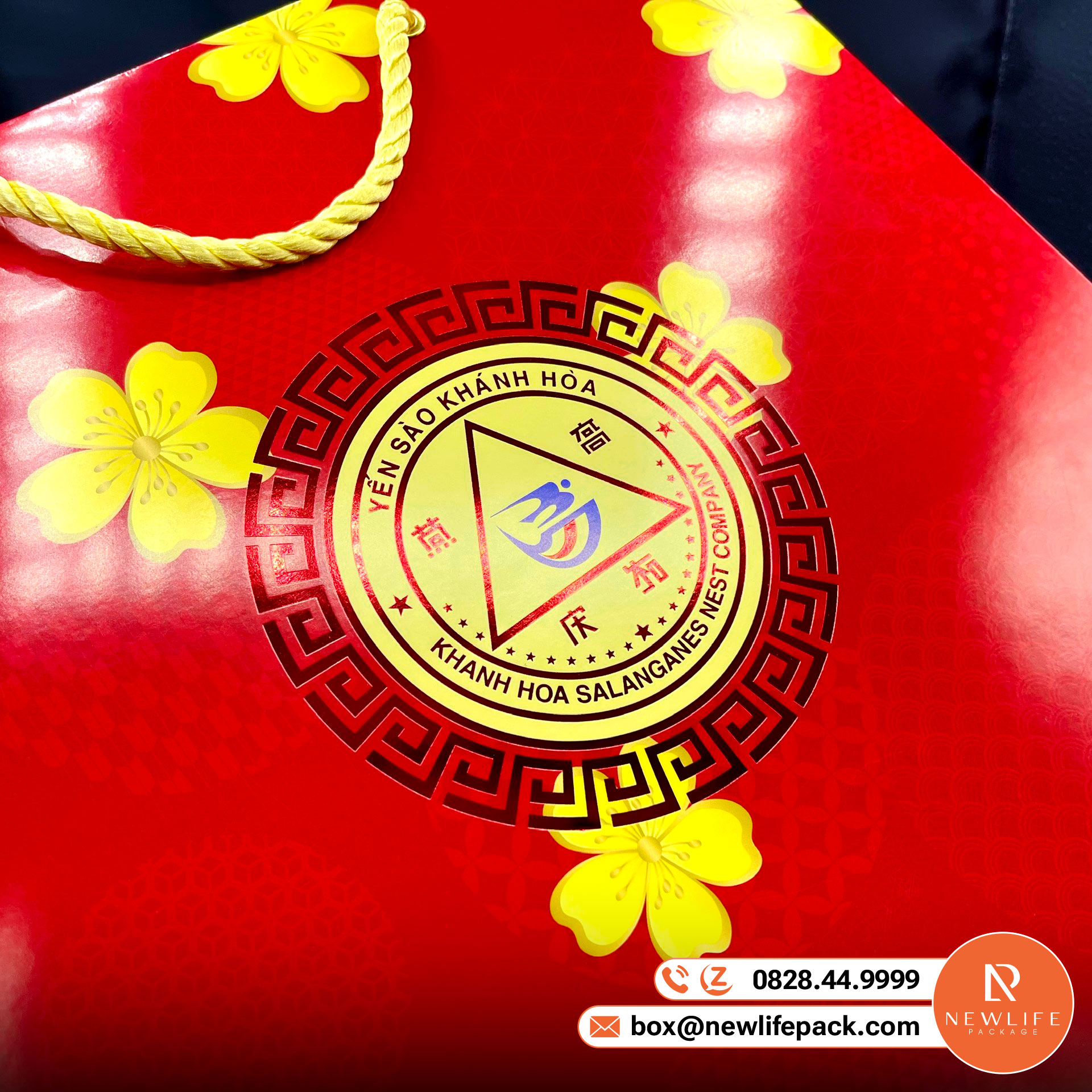
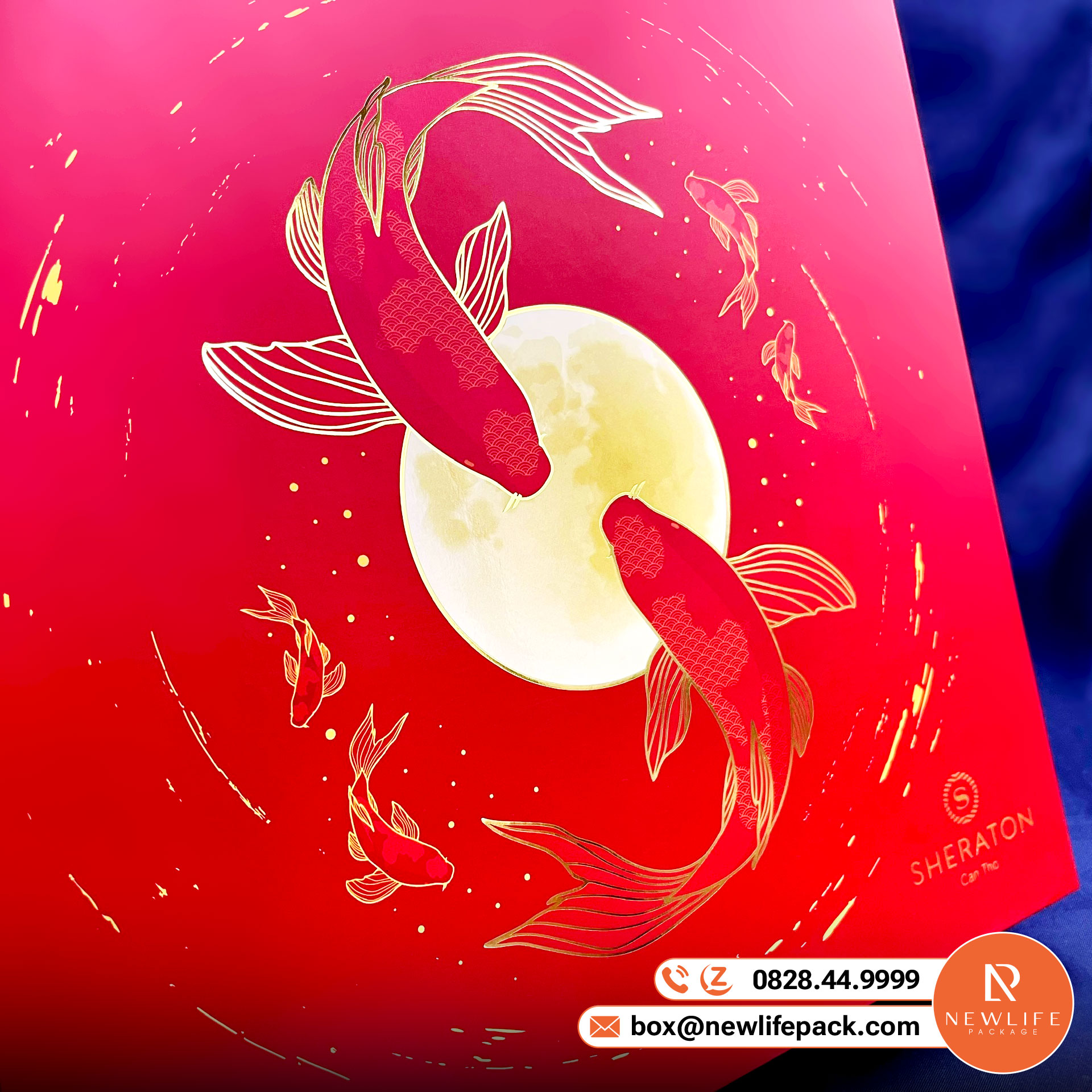
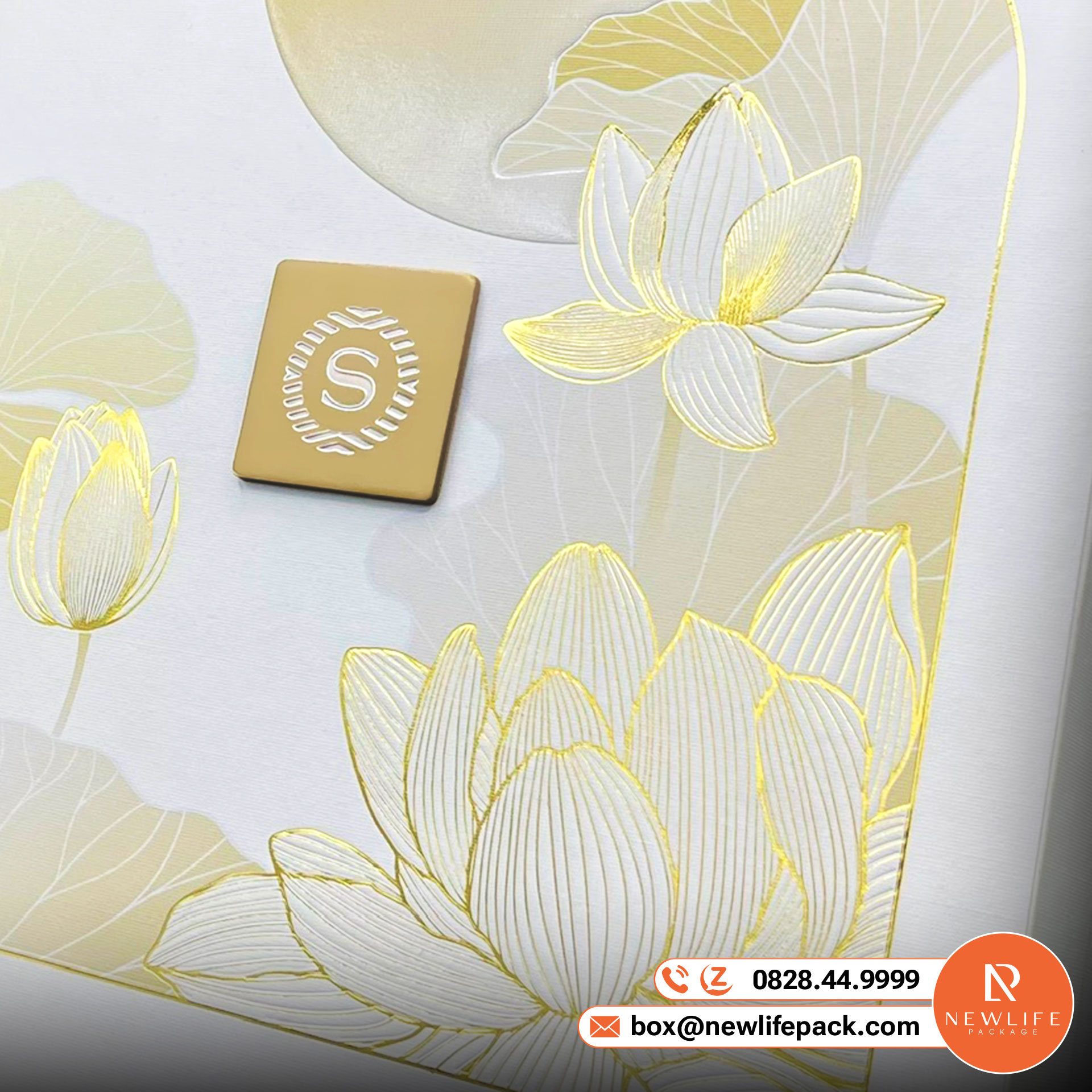
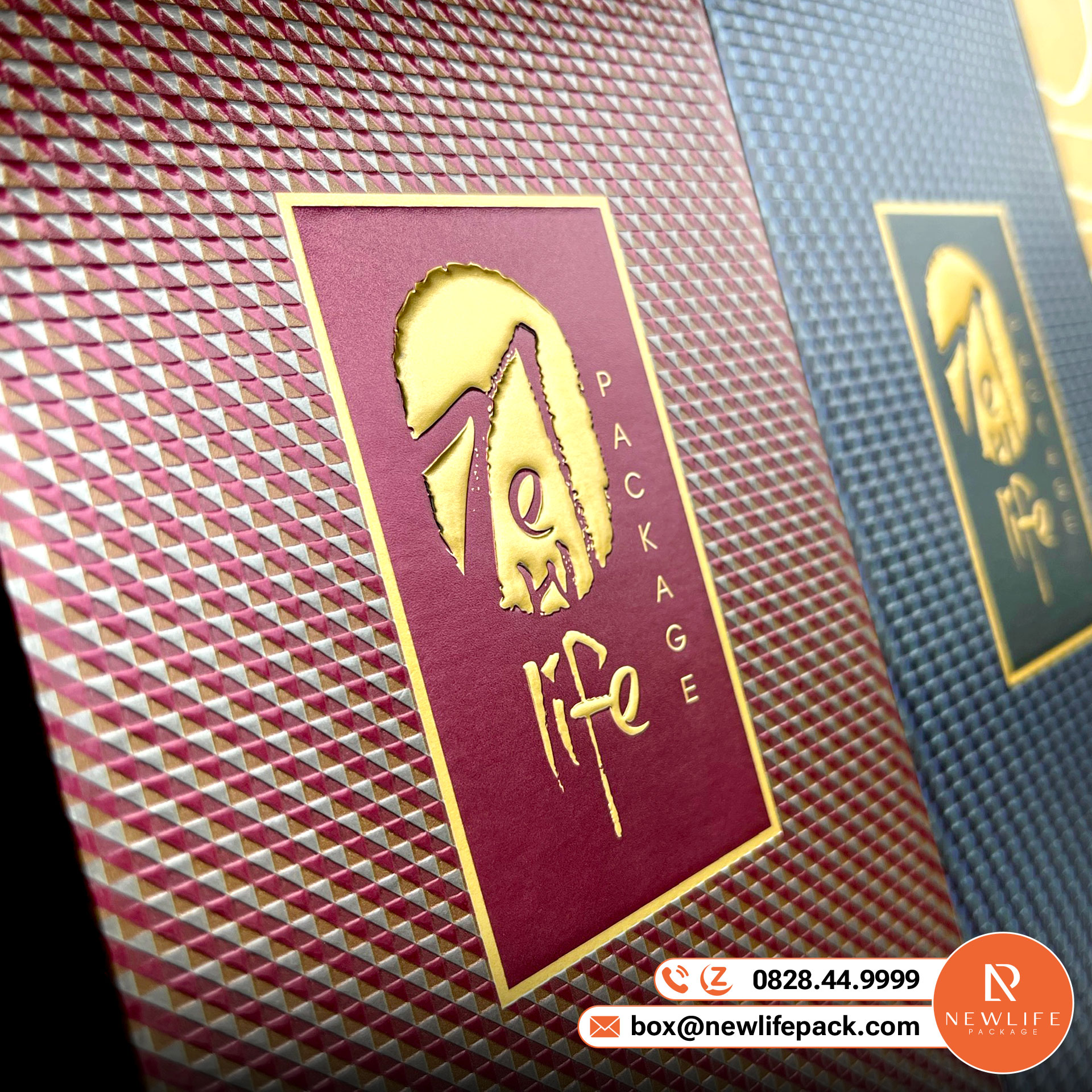
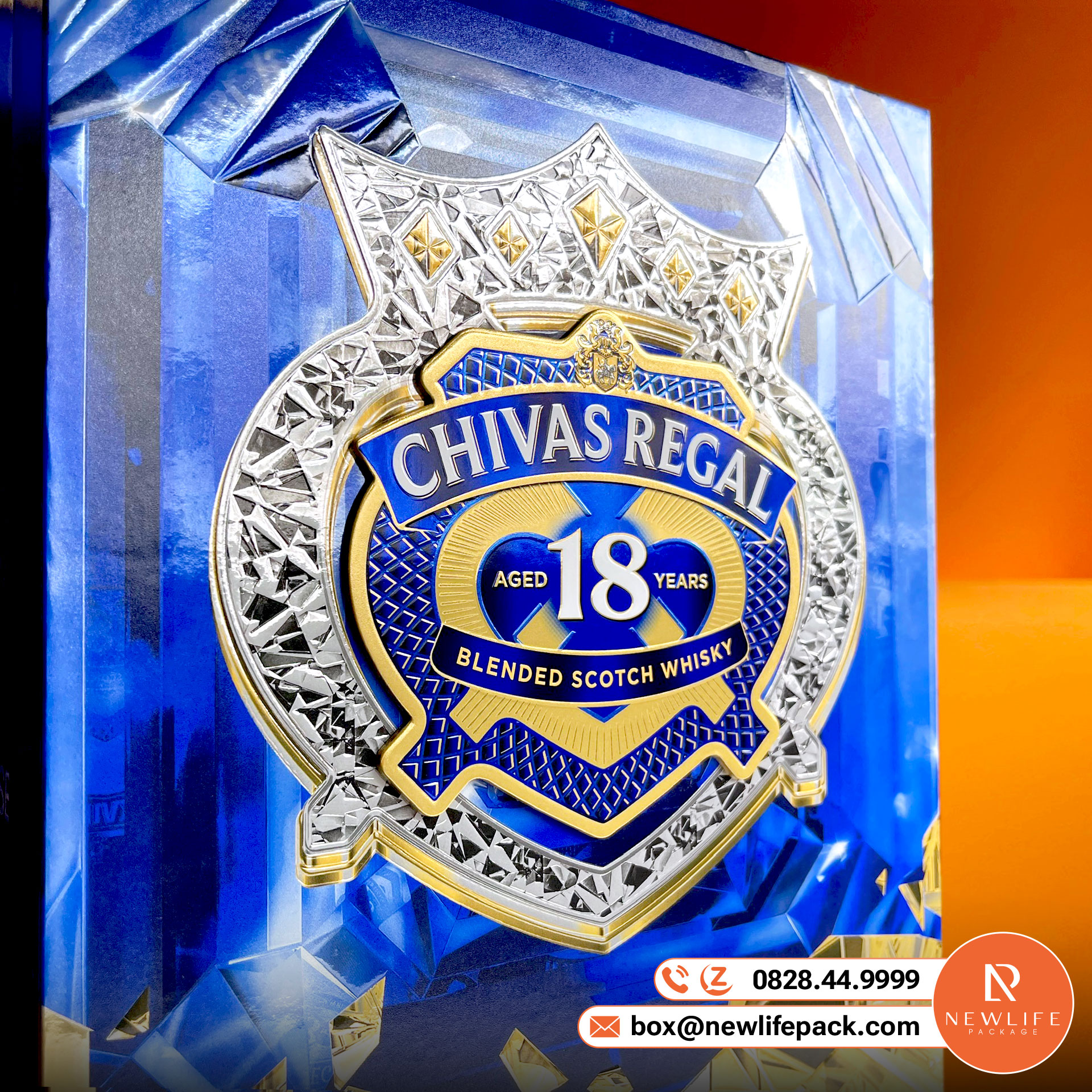
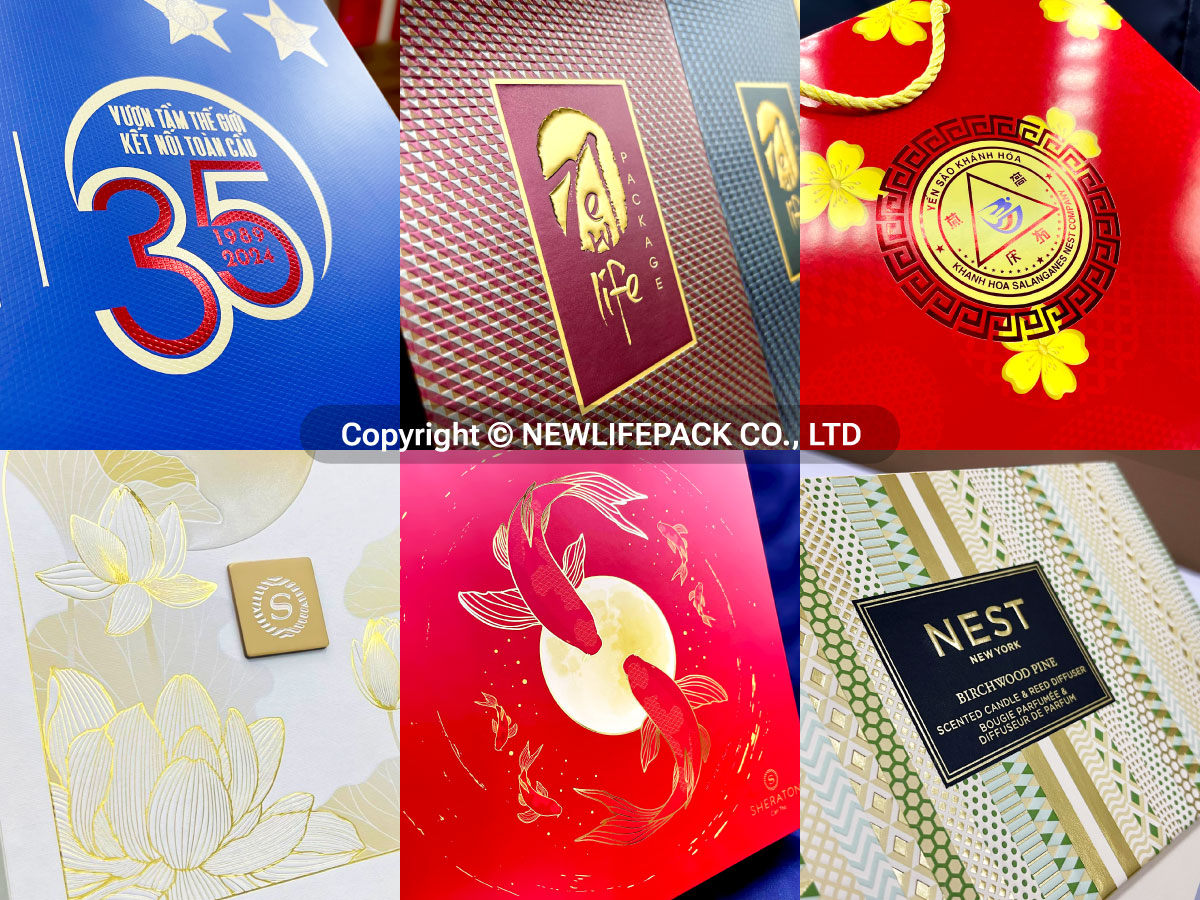
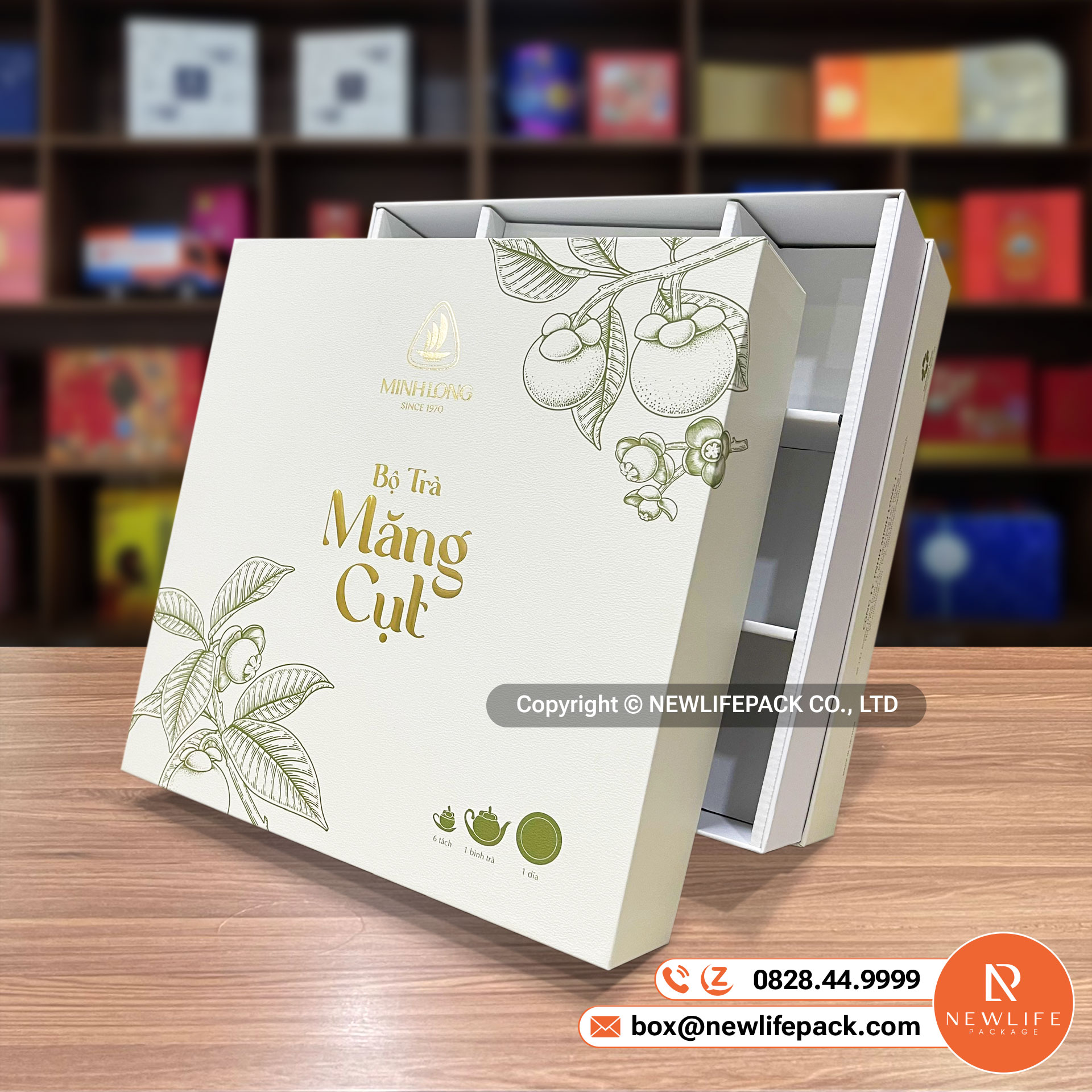
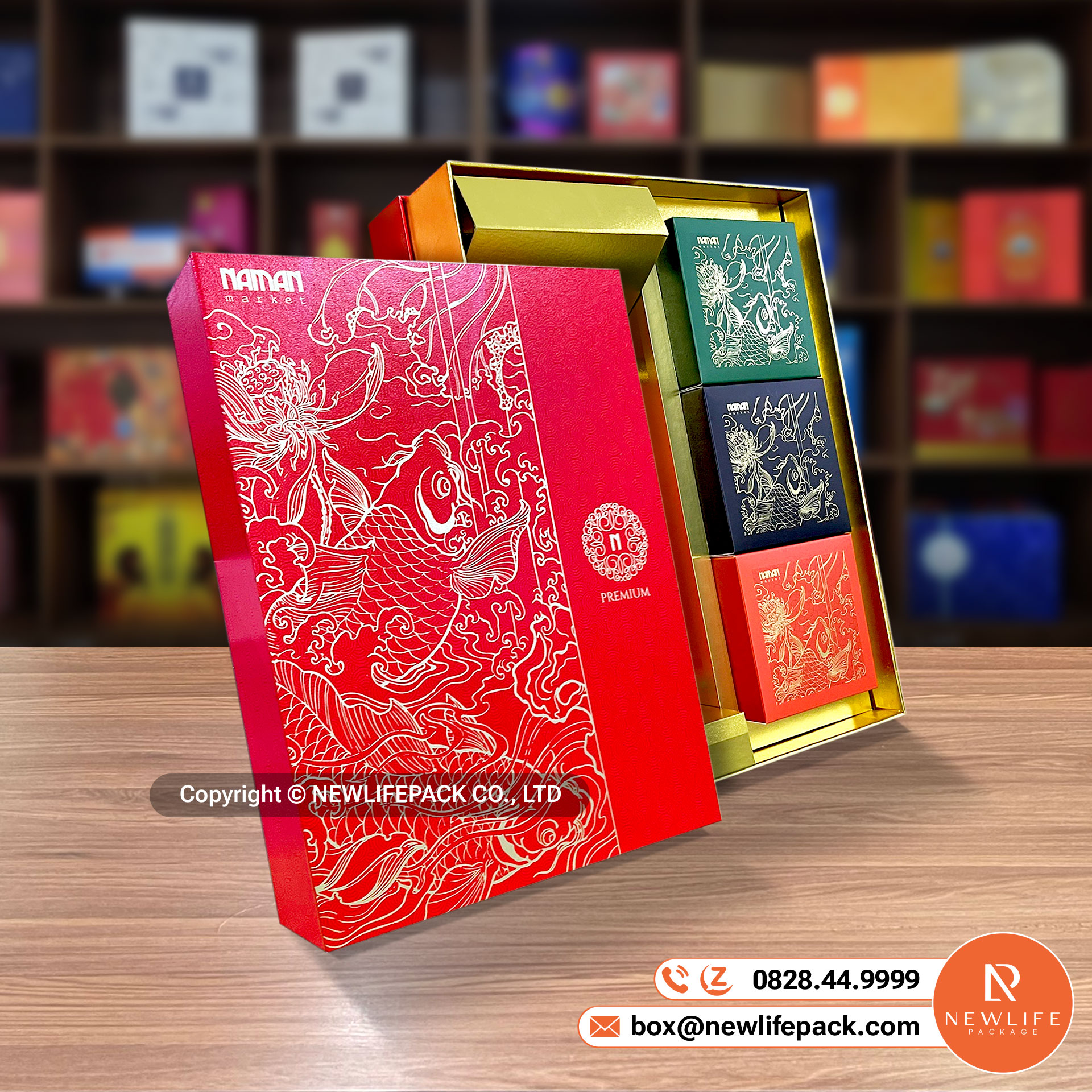
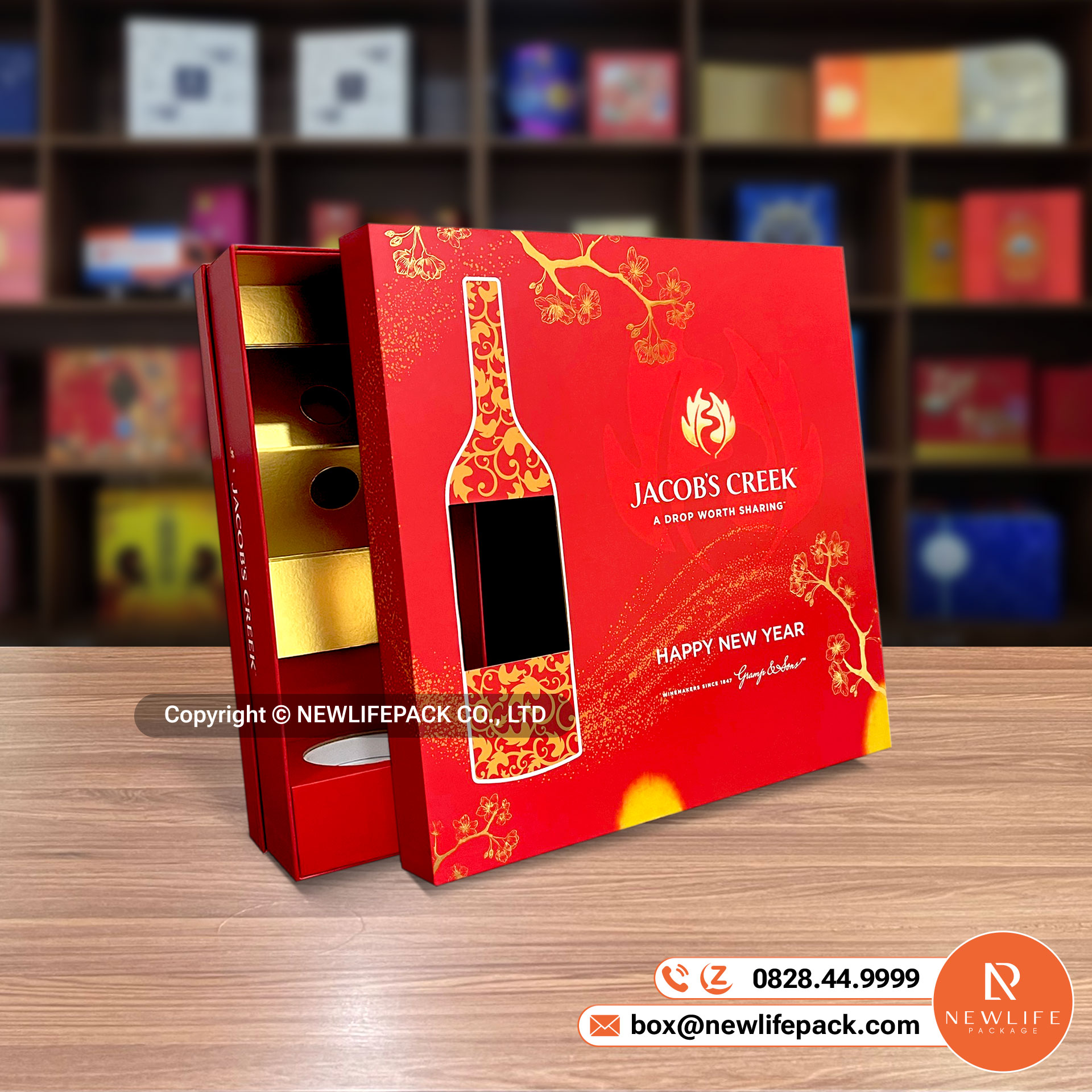
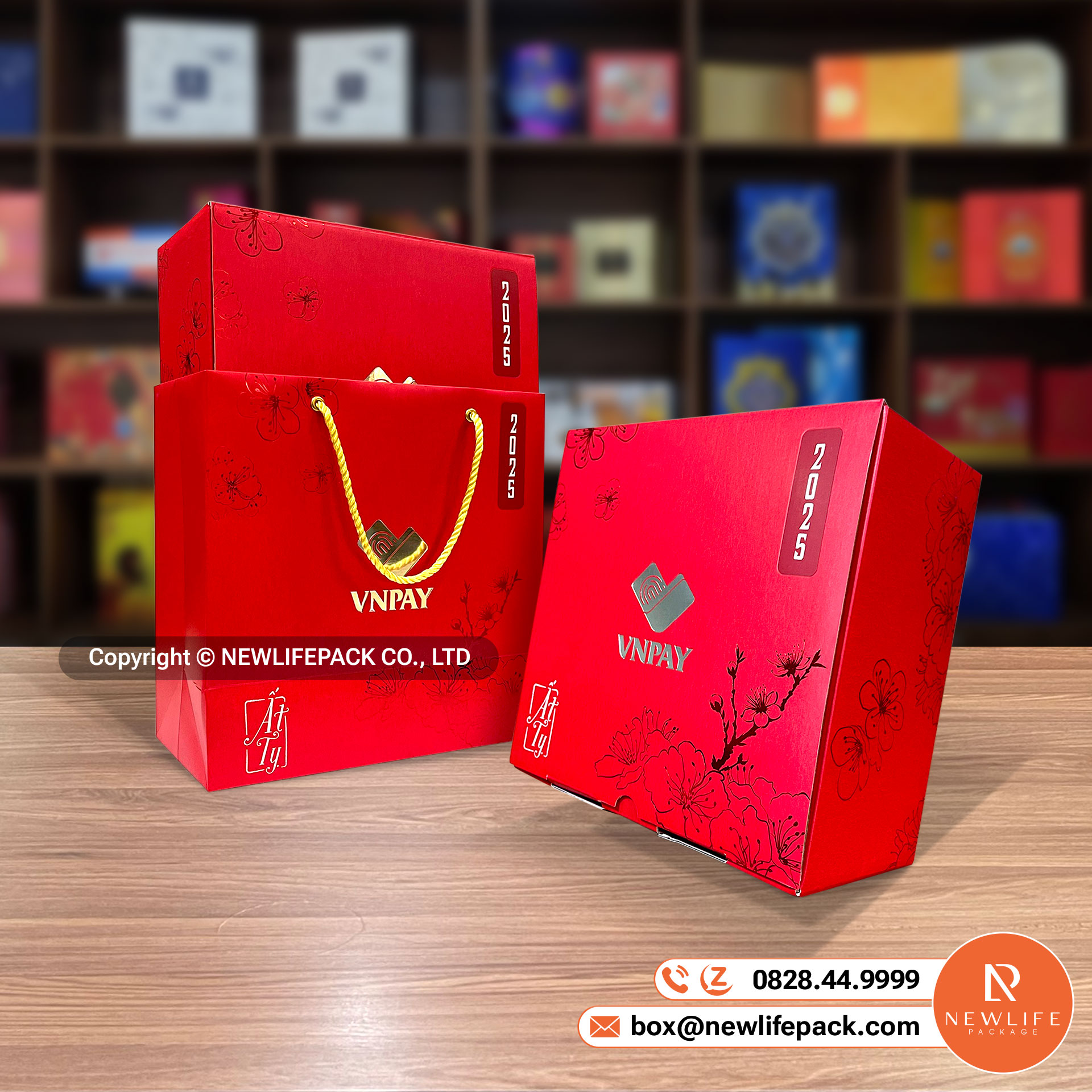
Foil-stamped Minh Long logo and product name Mangosteen Tea SetFoil-stamped Nam An Market logo and artwork Carp Gazing at the MoonFoil-stamped Jacob’s Creek logo and artwork Golden Apricot Blossom BranchFoil-stamped VNpay logo and artwork Red Peach Blossom Branch
1.2. Impact & Applications
✦ Creating a Premium and Sophisticated Impression
Hot foil stamping is a highly effective solution for packaging positioned in the premium segment, such as cosmetics, imported spirits, and chocolate. It is particularly well suited for Tet gift boxes, Mooncake packaging, rigid gift boxes, and premium printed materials—categories where perceived luxury is critical to purchase decisions. Through its high reflectivity and strong visual contrast, foil stamping activates subconscious associations with quality, prestige, and brand credibility.
✦ Enhancing Brand Recognition
The metallic finish enables products to stand out at the point of sale by capturing consumer attention, significantly improving brand recall. When combined with embossing or 3D embossing for logos and product names, brand visibility is further amplified through a distinctive visual and tactile experience—creating clear differentiation from conventional printing techniques.
✦ Supporting Anti-Counterfeiting and Product Authentication
While not a standalone anti-counterfeiting solution, foil stamping contributes to reducing imitation and unauthorized replication due to its reliance on physical stamping dies and associated tooling costs. This creates a meaningful technical barrier and serves as an implicit authentication cue, reinforcing consumer confidence in product authenticity and quality.
2. Foil Stamping Process and Technical Execution
2.1. System Architecture
✦ Stamping Die
The stamping die is the core component of the foil stamping process, typically made from brass, hardened steel, or magnesium. The die’s shape and precision directly determine the contour, sharpness, and uniformity of the foil-stamped details on the final product.
▸ Common Foil Stamping Die Materials in Vietnam
Die Material
Technical Characteristics
Preferred Use
Brass
Durable, good thermal conductivity, maintains fine details over time
Low-cost, lightweight, easy to machine, good thermal conductivity
Prototypes, small orders, test products
▸ Die Cost Economics
Die cost is a fixed expense, independent of production volume. For small orders, the cost is allocated to each unit, raising unit cost. For high-volume production, the cost is spread across many units, reducing unit cost and making foil stamping economically efficient.
✦ Foil Film
Hot stamping foil is a multilayer film engineered to transfer a metallic or decorative layer onto a substrate under heat and pressure. A typical foil structure includes:
▸ PET carrier film – provides dimensional stability and heat resistance during stamping
▸ Release layer – enables controlled separation of the decorative layers from the PET carrier when heat is applied
▸ Metallic or pigmented layer – delivers metallic sheen or color effects
▸ Heat-activated adhesive layer – bonds the decorative layer to the substrate under heat and pressure
During hot stamping, heat and pressure from the die activate the adhesive and release layer, allowing the decorative layer to detach from the PET carrier and transfer precisely onto the target area.
✦ Foil Stamping System
The foil stamping process is governed by four core operating variables—Temperature, Pressure, Dwell Time, Registration—which directly determine foil adhesion performance and edge definition of the stamped elements.
A hot foil stamping system can operate in manual, semi-automatic, or fully automatic modes, but must deliver the following core functions:
▸ Stable Pressure Ensures even force distribution across the die, enabling strong adhesion, sharp details, and minimizing defects such as pinholes, edge bleeding, or lifting.
▸ Precise Heating Temperature is accurately adjusted for each foil type and substrate, activating the adhesive effectively without scorching, discoloration, or deformation.
▸ Optimized Dwell Time & Alignment Dwell time and die positioning are precisely set to ensure foil transfer is accurate, consistent with the design, and meets high aesthetic standards.
2.2. Foil Stamping System Operation
▸ Step 1: Metal Die Fabrication
The die is engraved on copper, magnesium, or steel, selected based on detail level, production volume, and durability. This step determines the shape, edge definition, and precision of the foil-stamped area.
▸ Step 2: Mount Die and Foil Roll onto Heated Assembly
Secure the die on the heated unit and load the foil roll onto the feed shaft, ensuring stable tension and synchronized movement with the machine.
▸ Step 3: Heat the Die to Optimal Temperature
Die temperature typically ranges from 90–180°C, depending on foil type, adhesive structure, and substrate. The goal is to activate the foil adhesive without deforming or damaging the substrate surface.
▸ Step 4: Press Die onto Substrate under Controlled Pressure
Set pressure to ensure firm foil adhesion while avoiding die impressions, substrate compression, or fiber breakage. This parameter directly affects the sharpness and uniformity of the stamped foil.
▸ Step 5: Activate Adhesive and Transfer Foil
Through the combined effect of temperature, pressure, and dwell time, the adhesive on the foil is activated and bonds securely to the substrate at the target area.
▸ Step 6: Remove Carrier Film
After stamping, peel off the PET carrier film, leaving the foil precisely adhered to the substrate, achieving the intended foil effect with consistent quality and visual impact.
2.3. Compatible Substrates
✦ Coated Paper, Ivory Board, and Smooth-Surface Papers
Coated paper, ivory board, and other smooth-surface substrates represent the most suitable material group for foil stamping due to their stable coating layer, low moisture absorption, and high surface smoothness.
These characteristics enable strong foil adhesion, efficient heat transfer, and precise reproduction of fine details with exceptional sharpness. As a result, they deliver uniform metallic effects, high process stability, and superior quality control, making them the preferred choice for premium packaging applications.
✦ Kraft Paper, Textured Papers, and Rough-Surface Papers
Rough or porous materials—such as uncoated kraft paper or specialty papers with deep textures—can still be foil stamped, but require a higher level of technical control. The uneven surface and open fiber structure increase the risk of broken lines, pinholes, or discontinuous foil coverage, while reduced contact area weakens foil adhesion.
To achieve acceptable visual results, it is essential to fine-tune temperature, pressure, and dwell time in combination, and to select foil grades specifically engineered for rough or textured surfaces.
✦ Appropriate Substrate Grammage
For stable foil stamping performance, the base paper should typically be 250 gsm or higher.
Adequate grammage improves mechanical stability during stamping, minimizes the risk of tearing or deformation under heat and pressure, and reduces die marking or show-through on the reverse side, thereby preserving the overall aesthetic quality of the finished product.
✦ Chipboard and Corrugated Board
The standard production approach for rigid substrates is to foil stamp on the laminated paper layer first, then mount the finished sheet onto chipboard or corrugated board.
This method avoids uneven pressure, loss of detail, or surface indentation that can occur when stamping directly onto thick materials, while ensuring sharp, stable foil details and consistent visual quality in the final packaging structure.
2.4. Technical Considerations
✦ Minimum Line Thickness
Foil-stamped elements should be designed with a minimum line thickness of 0.15–0.2 mm to ensure reliable transfer and consistent reproduction.
Ultra-fine lines—particularly on textured or deeply grained papers—should be avoided, as limited contact area can lead to detail loss, broken lines, or uneven foil adhesion, directly compromising edge definition and overall finish quality.
✦ Spacing Between Foil-Stamped Elements
Foil details require adequate spacing (“breathing room”) and should not be placed too closely together. Insufficient spacing increases the risk of foil bridging, edge bleeding, or light overlap between adjacent stamped areas.
Proper spacing also supports effective heat dissipation from the die and ensures precise, stable foil transfer on each individual detail.
✦ Combination Foil Embossing
For foil embossing applications, foil and emboss layers must be separated at the design stage to enable accurate die manufacturing and precise registration. Accurate alignment between the foil die and embossing die is critical to prevent misregistration, distortion, or incomplete details.
Standard production practice involves foil stamping first, followed by embossing, or executing both simultaneously using a combination die on dedicated equipment. Throughout the process, pressure and temperature must be tightly controlled to ensure consistent foil adhesion while maintaining clean, well-defined dimensional relief.
✦ Large Foil Coverage Areas
Large foil areas are more susceptible to uneven adhesion, localized foil loss, or visual mottling, typically driven by substrate surface characteristics, inconsistent pressure distribution, or suboptimal stamping conditions.
Technical mitigation includes selecting foil grades engineered for large-area coverage, maintaining stable pressure, temperature, and dwell time, and prioritizing smooth-surfaced substrates to enhance adhesion and achieve uniform foil coverage with high visual consistency.
✦ File Preparation
Artwork files must clearly separate foil layers to support accurate die fabrication. When foil is applied over printed areas, introducing a controlled trap (slight overlap) is recommended to minimize visible gaps or registration tolerance issues.
In addition, files should be prepared at high resolution, with all text and vector elements converted to outlines, ensuring the foil die can reproduce contours accurately and deliver crisp, controlled stamping results.
2.5. Quality Control
▸Stabilize Machine and Components before Production Ensure the die, stamping head, and heating system reach a stable state to minimize deviations during continuous operation.
▸ Check Foil Adhesion and Confirm Security Perform a quick tape or peel test to verify that the foil adheres firmly to the substrate before full-scale production.
▸ Align Registration with Printed and Finishing Layers Ensure precise alignment of the foil with printed areas or other finishing layers to prevent misregistration or edge overflow.
▸ Optimize Pressure, Temperature, and Dwell Time Adjust pressure, temperature, and dwell time according to substrate type to achieve a smooth, sharp foil surface without scorching.
▸ Inspect Foil Surface and Correct Issues Promptly Continuously monitor during operation to detect common defects such as pinholes, edge bleeding, lifting, or incomplete coverage, and correct immediately before mass production.
3. Foil Types Used in Foil Stamping
3.1. Metallic Foil
✦ Technical Characteristics
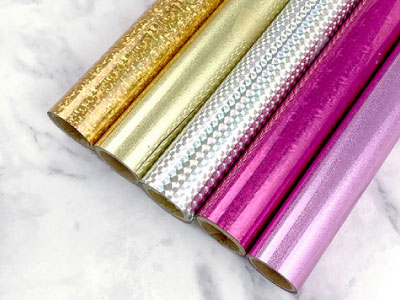
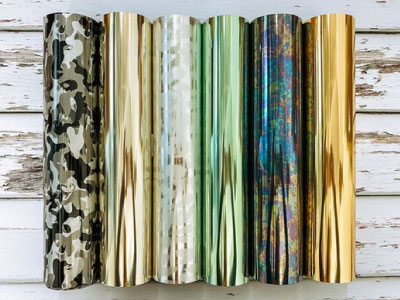
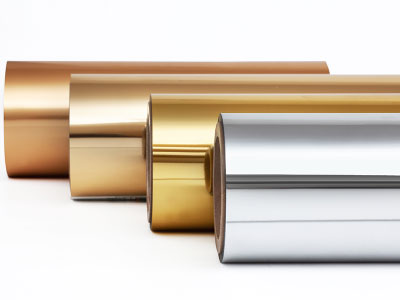
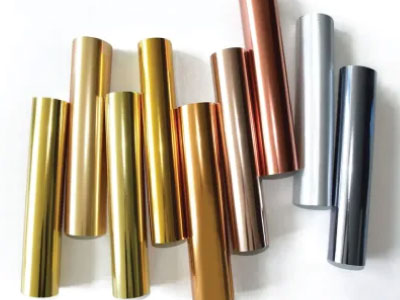
Metallic Foil is the most widely used foil type in hot foil stamping. It is manufactured as a foil film and supplied in foil rolls. Metallic foil consists of multiple layers, with a thin metallic layer—typically aluminum—vacuum-deposited onto a polyester (PET) or polymer carrier film through vacuum metallization.
During hot foil stamping, this metallic layer is transferred from the foil film onto the paper surface, accurately reproducing the metal layer within the stamped area. The result is a high-gloss metallic finish with strong light reflectivity, delivering sharp visual definition and a premium aesthetic for packaging, labels, and high-end branded print applications.
▸ Enhances brand visibility through bold, reflective surfaces.
▸ Conveys a premium, high-end impression, ideal for cosmetics, wine & spirits, gifts, and other luxury categories.
▸ Offers stable performance with strong adhesion and minimal stamping defects.
3.2. Pigment Foil
Beyond Metallic Foils, the hot stamping foil portfolio includes a range of non-metallic types, classified by coating structure, optical properties, and intended applications. Each foil type is engineered to meet specific technical requirements and visual effects. In practice, the adoption of non-metallic foils remains limited in Vietnam’s packaging industry. The following section highlights key representative foil types to provide a reference overview.
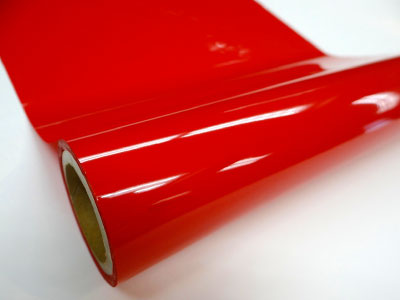
Pigment Foil is a foil type featuring a pigmented color layer coated onto a PET carrier film, used in hot foil stamping. Unlike metallic foil, pigment foil does not produce a reflective metallic effect; instead, it delivers a solid, uniform color layer that can achieve either a gloss or matte finish, depending on the desired effect when transferred onto the substrate.
Quick Comparison: Metallic Foil vs. Pigment Foil
Criteria
Metallic Foil
Pigment Foil
Light interaction
Strong metallic reflectivity
No metallic reflection
Color coverage
Limited by metal layer
High opacity, uniform color
Substrate compatibility
Best on smooth surfaces
Performs well on textured papers
Visual impact
Premium, high-shine
Bold color, visually softer
3.3. Holographic Foil
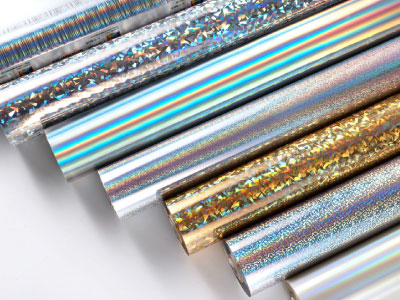
Holographic Foil is a foil film featuring high-precision micro-embossed surface structures. These microstructures function as diffraction gratings, causing incident white light to split into its constituent spectral colors. As a result, the surface exhibits dynamic visual and color-shifting effects that vary with the viewing angle.
3.4. Security Foil
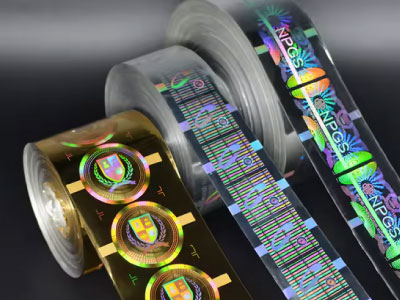
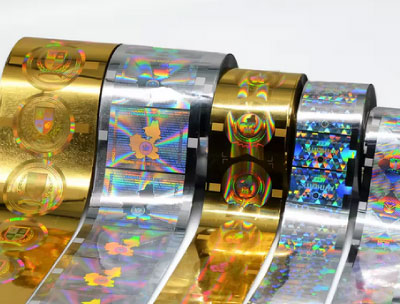
Security Foil is a specialized form of holographic foil engineered for anti-counterfeiting applications in packaging and print. The material incorporates high-security features that are difficult to replicate, such as microtext, hidden imagery, and proprietary optical elements.
During hot foil stamping, the foil layer bonds permanently to the substrate, making removal or reproduction extremely difficult. This significantly enhances product authentication and strengthens brand protection across high-value packaging applications.
3.5. Transparent Foil
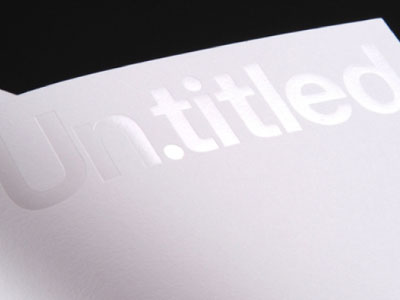
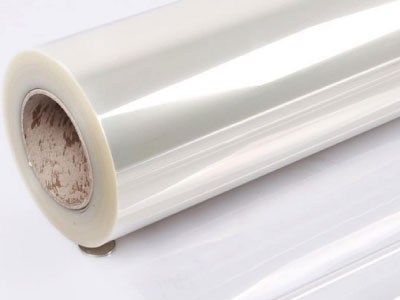
Transparent Foil (or Clear Foil) is a fully transparent or lightly tinted foil, available in gloss or matte finishes. When applied via hot foil stamping, it forms a near-invisible surface layer that preserves the underlying artwork while introducing controlled light interaction and a refined premium finish.
This foil type is well suited for packaging and label designs requiring subtle emphasis on selected elements without compromising overall visual clarity. It aligns with the Quiet Luxury aesthetic increasingly adopted across lifestyle and beauty categories, including cosmetics, fashion, wellness, and personal care.
3.6. Textured Foil
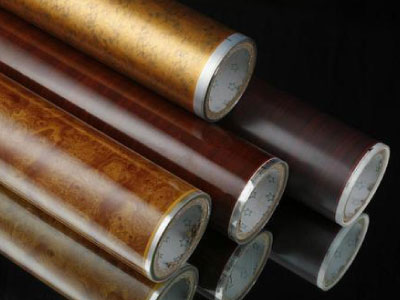
Textured Foil (or Pattern Foil) is a foil type with pre-defined decorative patterns and surface textures, including grains, ridges, embossed motifs, or reflective patterns engineered directly into the foil film. When applied through hot foil stamping, these patterns are transferred onto the paper surface, delivering distinct visual differentiation while also creating a tactile, touch-driven experience.
4. Foil Stamping Variants
Depending on the intended visual impact and tactile experience, foil stamping can be executed through three commonly applied technical variants:
4.1. Flat Foil Stamping
✦ Technical Characteristics
Flat Foil Stamping is the foundational foil stamping technique, employing a heated 2D die to transfer a metallic layer onto a flat substrate. This method delivers exceptionally sharp metal details, making it ideal for logos, fine typography, outlines, and small decorative elements, while ensuring maximum precision when dies and stamping parameters are properly calibrated.
✦ Impact & Applications
Flat Foil Stamping produces a consistent, even metallic finish, either gloss or matte, that enhances brand elements with superior visual clarity compared to conventional ink printing. It represents a straightforward, cost-efficient choice, with lower die and setup costs than embossed or 3D foil techniques, making it suitable for projects that require high aesthetic impact while optimizing production expenses.
This technique is widely applied in premium packaging, including labels, soft boxes (couche, ivory, duplex) for pharmaceuticals, confectionery, and premium FMCG, corrugated or rigid gift boxes, event invitations, catalog covers, and other printed materials demanding a luxury finish. Flat Foil Stamping is particularly well-suited for the Quiet Luxury trend within the lifestyle and beauty sectors, encompassing cosmetics, fashion, wellness, and personal care.
4.2. Foil Embossing
✦ Technical Characteristics
Foil Embossing (Combination Embossing) is a premium finishing technique that combines metallic foil transfer with physical embossing on the paper surface. This process produces metallic details with a distinct raised profile, delivering enhanced visual depth, tactile experience, and brand recognition compared to conventional flat foil stamping.
Foil embossing can be executed using two technical approaches:
❖ Single-pass Combination Embossing
Single-pass Combination Embossing is performed in one single press operation on a dedicated stamping machine, using a combination die set (male–female) engineered simultaneously for foil transfer and embossing. Under precisely controlled heat and pressure, the foil is transferred to the paper surface while the embossed structure is formed at the same time.
This streamlined process enables high production efficiency and faster throughput; foil-to-emboss registration is accurately controlled by die design, ensuring consistency across production runs. It is well suited for small to medium-sized details requiring a moderate embossing height, making it ideal for standard premium packaging applications.
❖ Two-pass Foil Stamping and Embossing
Two-pass Foil Stamping and Embossing (Foil First, Emboss After) is executed as two separate operations. In the first pass, metallic foil is flat stamped onto the paper surface to achieve optimal coverage, gloss, and edge sharpness. The sheet is then processed in a second pass, where a dedicated male–female embossing die forms the raised structure precisely over the foiled area.
This method allows independent control of foil quality and embossing depth, making it particularly suitable for thicker foils, holographic foils, or rigid paper stocks that require higher embossing pressure. However, it demands high-precision registration between the two passes and results in longer production time and higher costs, and is therefore typically applied to premium packaging and high-end brand collaterals.
🔍 Quick Comparison: Single-pass vs. Two-pass Foil Embossing
Criteria
Single-pass
Two-pass
Number of passes
1
2
Control of foil & embossing
Simultaneous
Independent
Foil stability
Good
Excellent
Maximum embossing height
Medium
High
Registration requirement
Die-controlled
Extremely high between passes
Typical applications
Standard premium packaging
Premium packaging, specialty foils
✦ Impact & Applications
Compared to flat foil stamping, Embossed Foil Stamping creates foil effects with greater depth and elevated aesthetic value, highlighting logos, icons, and key design elements. It also enhances tactile engagement and visual appeal when the product is displayed.
This premium finishing solution is ideal for premium and luxury brands, high-end gifts, and applications that emphasize sophistication, exclusivity, and a distinctive appearance. Embossed foil stamping is widely applied on Tet gift boxes, mooncake boxes, luxury packaging for cosmetics, liquors, bird’s nest products, as well as paper bags, invitations, and wedding cards.
4.3. Sculpted Foil Stamping
✦ Technical Characteristics
Sculpted Foil Stamping is a premium surface finishing technique that combines foil stamping with high-relief embossing to create three-dimensional metallic details. The method delivers dynamic metallic effects that shift with viewing angle and surface contours, offering a visually striking and tactilely engaging experience.
At Newlifepack, this technique is executed through a structured three-step process:
▸ Step 1 – Flat Foil Stamping on Laminated Paper Foil is first applied to laminated paper (couche, ivory, or art paper) to ensure precise detail, consistent adhesion, and accurate graphic registration before the subsequent embossing step.
▸ Step 2 – Lamination onto Chipboard The foiled laminated paper is then adhered to chipboard, creating a stable and sufficiently thick base for deep embossing while enhancing the aesthetic quality of the surface.
▸ Step 3 – 3D Embossing on Chipboard Base High-relief 3D embossing is performed on the foiled areas using specialized hydraulic presses. This process sculpts multi-level reliefs, defining the foil along different heights and creating an elevated, visually and tactilely premium effect.
This execution approach minimizes the risk of tearing or distortion of the paper substrate under high pressure and heat. At the same time, it leverages the thickness and structural stability of chipboard to achieve pronounced relief, smooth foil transitions, and long-lasting dimensional stability.
✦ Impact & Applications
Sculpted Foil Stamping delivers the highest level of visual and tactile impact within traditional foil stamping techniques, combining metallic shine with three-dimensional relief. This method significantly enhances tactile engagement, allowing surfaces to be perceived by touch, while adding visual depth and differentiation that flat foil stamping cannot achieve.
It is ideally suited for highlighting premium brand logos, monograms, icons, or central design motifs on packaging. Applications include high-end cosmetic packaging, bird’s nest and supplement products, liquor & celebration beverages, corporate gifts and signature presents, special-edition and limited-edition packaging, as well as premium printing projects requiring exceptional visual and tactile effects.
5. Alternative Metallic Effect Technologies
In addition to hot foil stamping, the packaging printing industry has developed several alternative technologies to achieve metallic effects without the use of heated dies. These methods address different priorities related to production volume, line speed, tooling cost, and design flexibility.
Below are the three most widely adopted metallic-effect technologies currently used in commercial packaging production.
5.1. Cold Foil Stamping
Cold foil stamping is a finishing technique that produces metallic effects directly on paper or printed substrates without the use of heat. The metallic foil is bonded to the surface using UV-curable adhesive, delivering sharp, consistent imagery across large areas.
The process involves printing a foil-receptive adhesive, laminating the foil onto the wet adhesive, and curing it under UV light to achieve permanent fixation. This approach enables fast, uniform foil transfer, optimizing production speed while maintaining reliable visual quality.
Cold foil stamping is well suited for high-volume packaging and label applications, particularly in FMCG environments. By eliminating the need for heated dies, it reduces tooling costs and setup time, while delivering controlled, refined metallic effects where extreme gloss is not a critical requirement.
5.2. Digital Foiling
Digital Foiling (or Foil Sleeking) is a finishing process in which foil-receptive areas are created using UV polymers, toner, electrostatic charge, or digital coatings, enabling foil application directly from digital data without the use of dies or traditional printing plates.
This approach is optimized for personalization, short- to mid-run production, and complex designs. It supports raised and dimensional effects, foil embossing, and hybrid applications combining foil with selective varnish, while significantly reducing setup time by eliminating mechanical tooling. Digital control ensures high placement accuracy and design fidelity.
Digital foiling is well suited for premium packaging, gift packaging, branded print materials, and personalized products. It is an ideal solution for projects that require intricate detailing, tactile effects, or one-of-a-kind visual accents.
5.3. Metallic Knockout
Metallic Knockout is a visual effect created by white ink underprinting on metalize paper. White ink is selectively applied to mask the metallic sheen in designated areas, while unprinted regions retain the natural metalized surface, producing a strong reflective contrast. CMYK or spot colors can be printed directly onto the metalized surface or layered over the white ink, depending on the intended design outcome.
This method does not require foil stamping or metal dies and can be executed directly on offset, flexographic, or gravure presses compatible with metalized substrates. It enables uniform metallic effects across large surface areas, with visual intensity precisely adjustable through white ink coverage. By eliminating mechanical stamping processes, Metallic Knockout improves cost efficiency while increasing production speed and scalability.
Metallic Knockout is particularly well suited for premium cosmetics, pharmaceuticals, and food & beverage packaging, including bottle labels, metalized pouches, and high-end folding cartons. It is an effective solution when a broad, consistent metallic appearance is required, offering a balanced combination of visual impact, production efficiency, and cost control.
🔍 Quick Comparison: Four Metallic Effect Technologies
Criteria
Hot Foil Stamping
Cold Foil Stamping
Digital Foiling
Metallic Knockout
Process mechanism
Uses metal die + heat + pressure to transfer foil onto the substrate
UV adhesive is printed first; foil bonds to wet adhesive and is then UV-cured
Foil adhesion zones created via polymer, toner, or digital coating and transferred from digital data
White ink is printed to mask metallic areas on pre-metalized paper
Metallic appearance
Highest gloss, sharp, luxury-grade
Medium gloss, stable, suitable for large areas
High gloss; capable of raised and 3D foil effects
Uniform metallic sheen over large areas with a natural metalized look
Edge sharpness
Very high, excellent fine detail
Good, but less sharp than hot foil
Technology-dependent; extremely sharp for small details
Large-area metallic effects at optimized cost; smooth gradients
6. Foil Stamping Capabilities at Newlifepack
Backed by a fully integrated production system, Newlifepack operates both automatic and semi-manual foil stamping lines to address a wide spectrum of packaging requirements—from high-volume production to highly intricate, detail-driven applications. This dual setup enables speed, consistency, and precision at scale, while maintaining flexibility for premium executions.
6.1 Automatic Foil Stamping Equipment
Automatic systems form the backbone of Newlifepack’s foil stamping capacity, supporting projects that demand high throughput, tight lead times, and uniform quality across large production runs.
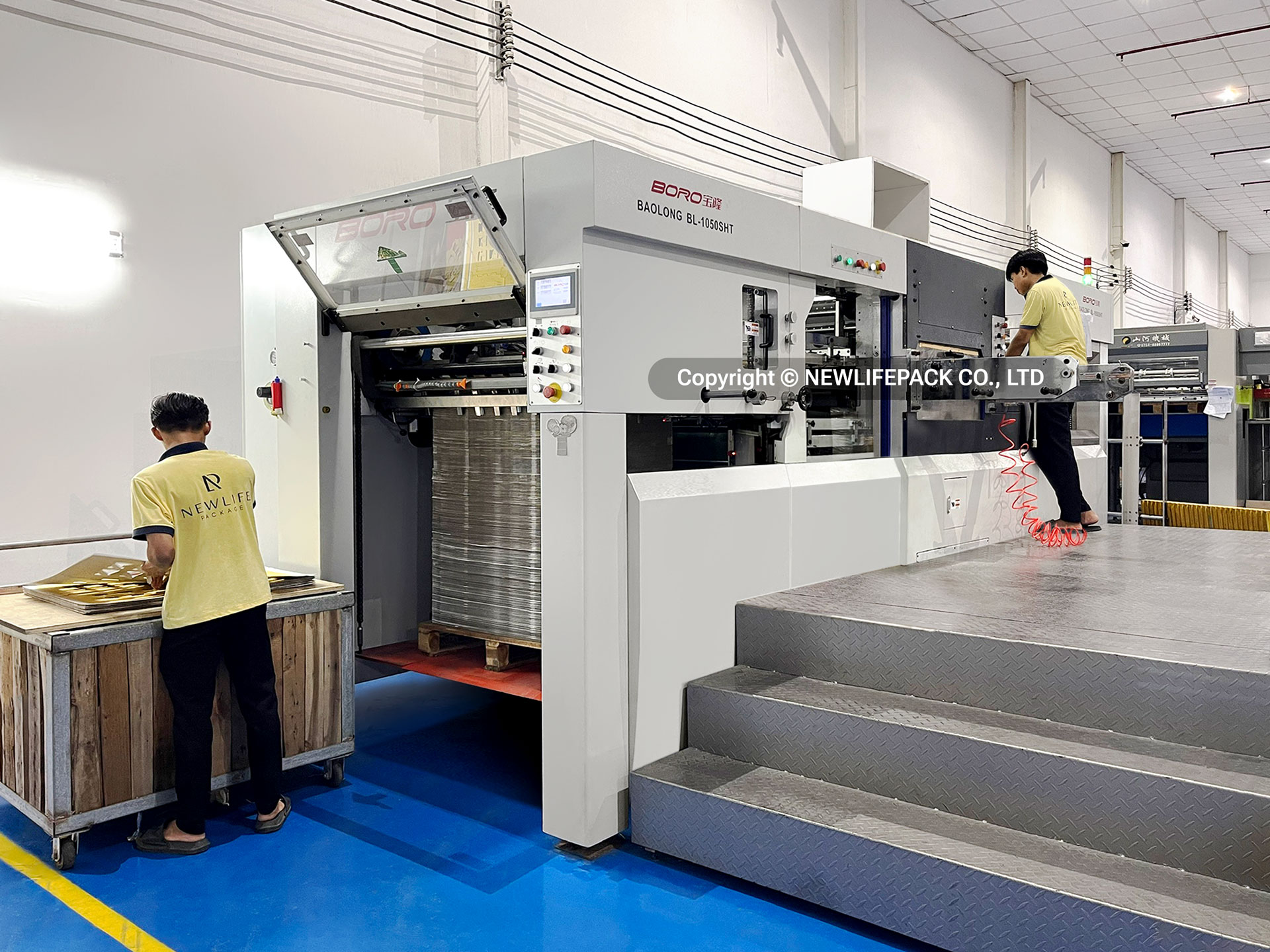
▸ Functions: die creasing/ die cutting, embossing/ debossing, hot foil stamping ▸ Maximum sheet size: ~1050 × 750 mm ▸ Operating speed: ~7,000–7,500 sheets/ hour ▸ Registration accuracy: ±0.10 mm ▸ Best suited for: combination dies, foil embossing effects, and multi-process premium packaging in a single pass
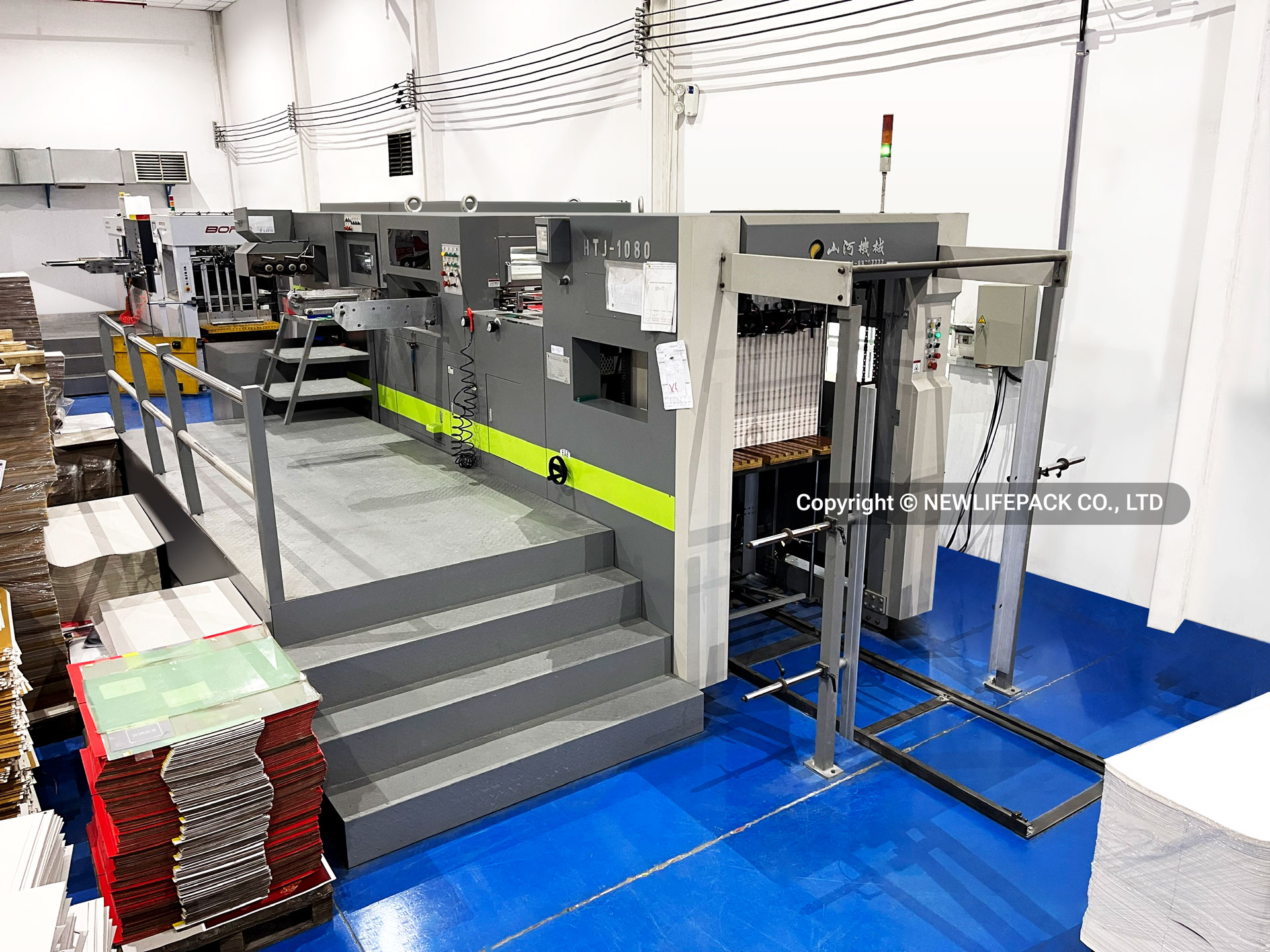
✦ OUTEX HTJ-1080 Automatic Foil Stamping Machine
▸ Maximum sheet size: ~1080 × 760 mm ▸ Operating speed: ~6,000–6,500 sheets/ hour ▸ Independent multi-zone heating system ensures stable foil transfer across large stamping areas
▸ Best suited for: large-area foil applications requiring high consistency and thermal control
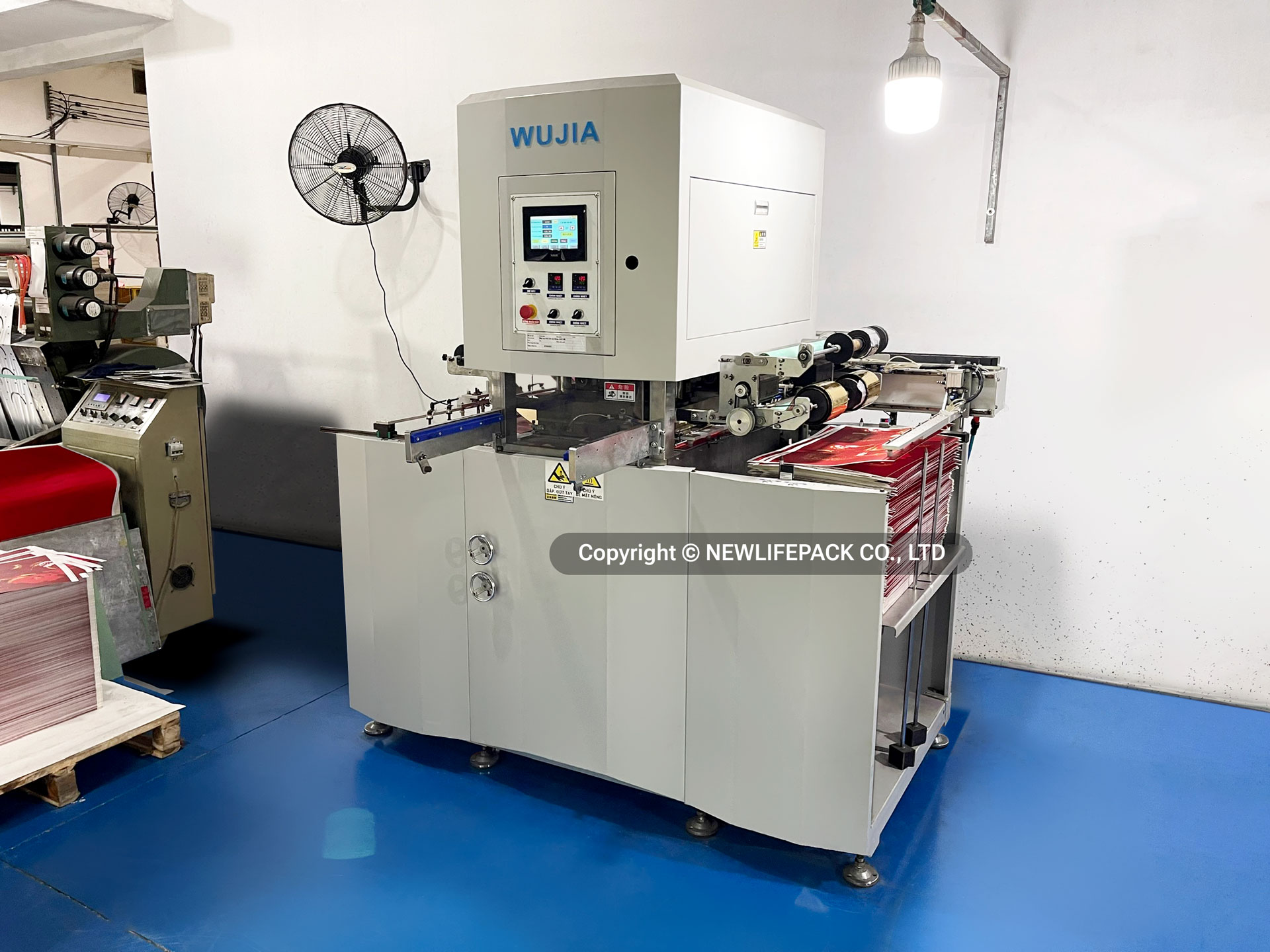
✦ WUJIA JXZC 80 Automatic Foil Stamping Machine
▸ Maximum sheet size: ~800 × 600 mm ▸ Operating speed: ~4,500–5,000 sheets/ hour ▸ Best suited for: logos, large graphic elements, and complex foil layouts requiring stable pressure distribution.
6.2. Overall Foil Stamping Capacity
Based on the current equipment footprint and a three-shift operating model, Newlifepack delivers reliable, scalable foil stamping performance:
▸ Maximum daily output: 200,000–250,000 finished sheets (depending on die complexity and foil coverage) ▸ Registration accuracy: ±0.05–0.10 mm ▸ Maximum foil stamping size: up to 1080 × 760 mm Supported effects: flat foil stamping, foil embossing, sculpted foil stamping, and multi-zone combination dies.
Conclusion
Foil Stamping is more than a decorative post-press technique. It is a visual language of prestige and cultural refinement, particularly aligned with premium gift packaging such as Tet gift boxes, mooncake boxes, and other high-end packaging applications.
With nearly two decades of experience in printing and packaging, Newlifepack has established itself as a trusted partner for leading brands in translating design intent into refined physical outcomes—especially in foil stamping and metallic finishing effects.
Backed by an integrated production system that includes high-capacity automatic foil stamping and embossing equipment, along with a seasoned technical team, Newlifepack consistently delivers foil-stamped results that are precise, uniform, and durable—meeting the highest standards of premium packaging production.
Newlifepack Co., Ltd.
Newlife Packaging Printing Company (Newlifepack Co., Ltd. – since 2008) is a leading manufacturer of Paper Packaging and a trusted provider of Custom Rigid Boxes based in Ho Chi Minh City, Vietnam.
Professional Packaging Manufacturer
▸ Perfect color reproduction using advanced offset printing technology with the KOMORI Lithrone 6-color press ▸ 15,000 m² facility equipped with modern automation, capable of handling large orders with tight deadlines ▸ Closed-loop production process: fully in-house, no outsourcing. Guaranteed stable quality and competitive pricing ▸ Certified with: ISO 9001:2015, ISO 14001:2015, GMI, GSV, FSC, SMETA
Contact Us:
▸ Headquarters & Factory: 68 Tran Van Cham Street, Cu Chi Commune, Ho Chi Minh City, Vietnam (Formerly: 68 Tran Van Cham Street, Phuoc Vinh An Commune, Cu Chi District, Ho Chi Minh City, Vietnam) ▸ Telephone: +84 28 3790 2768 ▸ Hotline: +84 828 449 999 (Business Department) ▸ Email: box@newlifepack.com (Board of Directors) ▸ Website:https://newlifepack.com ▸ Fanpage: https://www.facebook.com/newlifepack
Thank you for considering us among the many packaging and printing providers. We’re excited for the opportunity to work with you!
1. What Is a Corrugated Box? The Corrugated Box originated in the mid-19th century as an application of corrugated board and gradually became one of the most widely used packaging solutions worldwide by the early 20th century. Leveraging the inherent advantages of corrugated board, which features a multi-layer structure of flat linerboards and fluted medium, […]
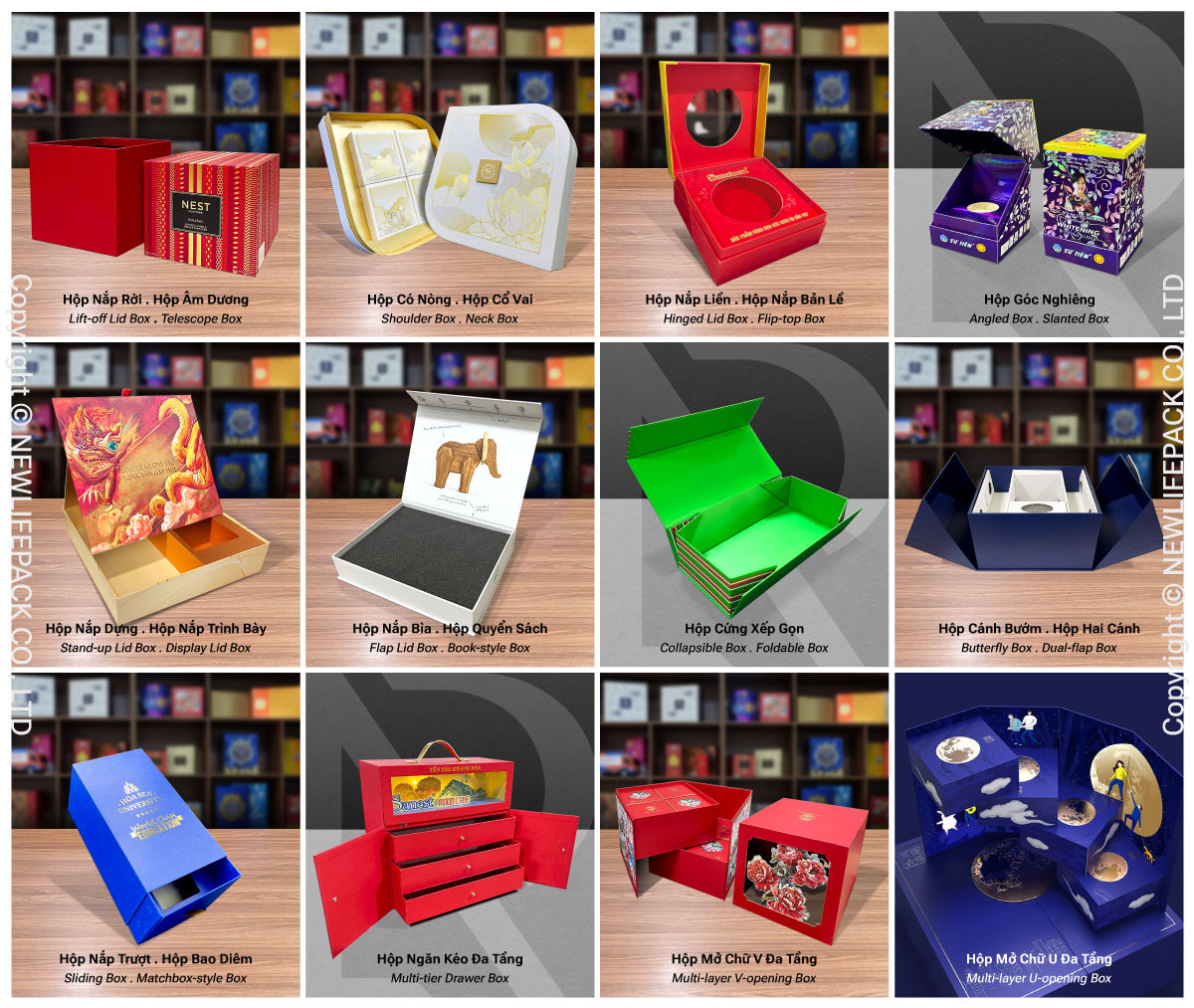
In this feature, Newlifepack presents 12 of the most common rigid box structures—also known as chipboard boxes or cold carton boxes—organized according to Vietnamese–English–Chinese industry terminology. Each structure is accompanied by an analysis of its technical characteristics, structural design, and practical applications. The content is developed as a reference resource to support businesses in selecting […]
The Year of the Fire Horse 2026 is symbolized by the horse—a figure long associated with movement, opportunity, and smooth progress in East Asian culture. In Lunar New Year Gift Box design, horse motifs serve not only as decorative elements but also as a symbolic language of feng shui, conveying blessings, guiding positive energy, and […]
The year-end period—especially the weeks leading up to Christmas —consistently marks a surge in consumer demand for both gift-giving and self-reward purchases in Vietnam. This seasonal behavior serves as a key driver for occasion-based brands to refresh their packaging, launch Christmas collections, and introduce festive-edition designs that enhance on-shelf appeal and stimulate impulse purchases at […]
Combining material-efficient construction with Japanese-inspired aesthetics, the N-Shiki Roll-end Mailer (N-type Mailer / N式盒) represents a forward-looking packaging solution for the fast delivery market in Vietnam. This article is copyrighted by newlifepack.com. Please share from this site or cite the source when quoting. 1. The N-Shiki Roll-End Mailer N-shiki Mailer (N-type Mailer / N式盒) is […]
Leveraging our high-speed mass-production line for Collapsible Rigid Boxes (可折疊硬盒), Newlifepack introduces the Collapsible Tet Gift Box with Ribbon Tie and Magnetic Closure — a smart, modern packaging solution engineered to optimize both product aesthetics and supply-chain efficiency. This article is copyrighted by newlifepack.com. Please share from this site or cite the source when quoting. […]
Tết Nguyên Đán — the Vietnamese Lunar New Year, commonly known as Tet — is deeply rooted in the tradition of gift-giving, a way to show respect, send wishes of prosperity, and express heartfelt sentiments. As modern life accelerates, Tet Gift Boxes have become the smarter choice for the season — offering sleek, elegant designs, […]





 Quick Comparison: Metallic Foil vs. Pigment Foil